
How to Use AI to Start a Business in 2026
Use AI to find a real problem, validate demand, choose a business model, build a focused MVP?, and win a first customer with this practical 7-step guide.
12 min read
Introduction
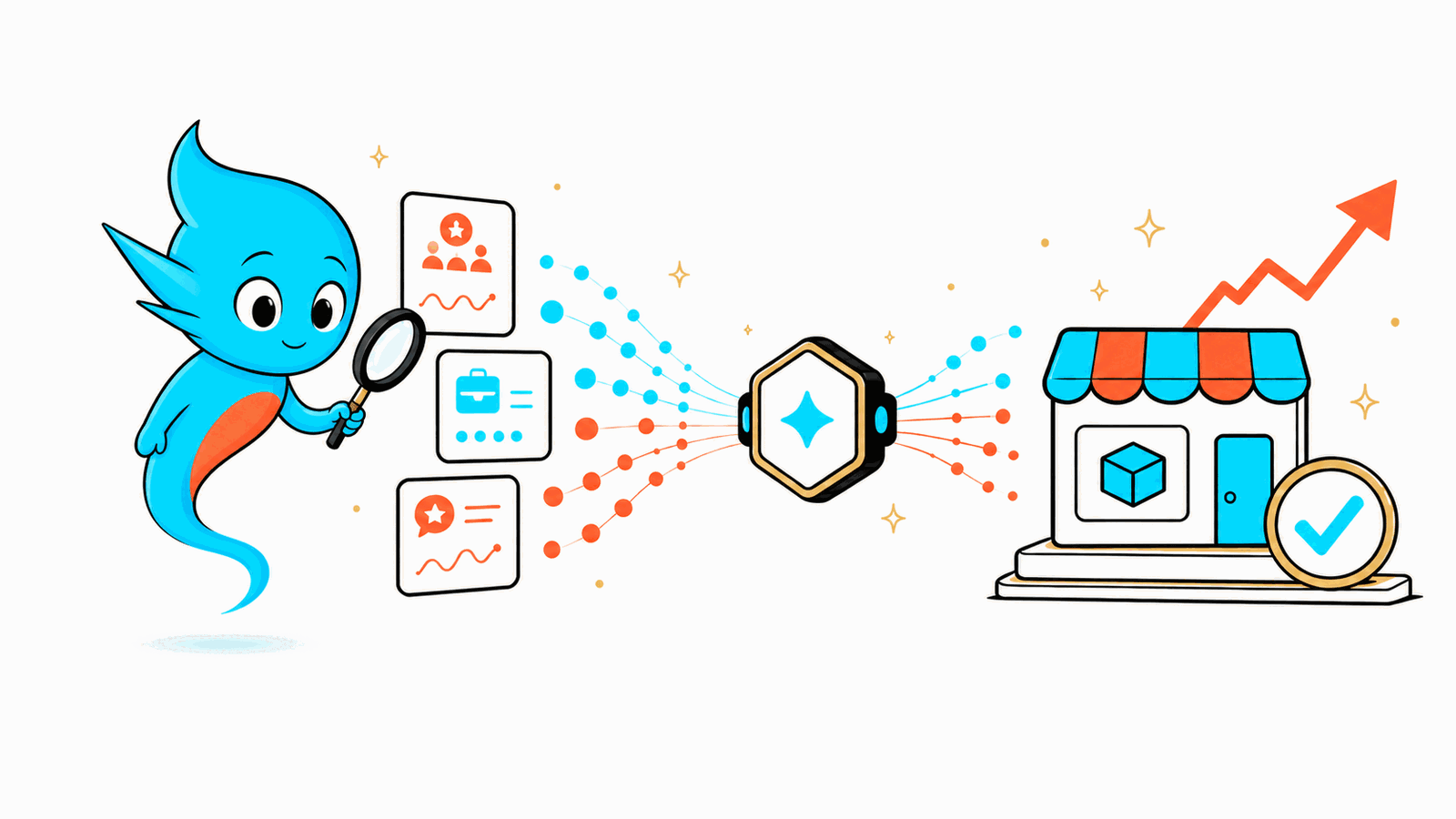
The practical way to use AI to start a business is to let it accelerate research, synthesis, prototyping, and operations while you remain responsible for evidence, judgment, and customer trust. Start with a recurring problem, verify that real people experience it, make a narrow offer, test whether someone will pay, and only then automate the parts that slow delivery.
This distinction matters because an AI-generated idea is not market validation. A model can produce a polished plan for almost any concept. It cannot tell you that a specific buyer has the problem today, dislikes the available alternatives, controls a budget, or will choose your offer. Those claims need observable evidence.
The opportunity is still substantial. The U.S. Chamber of Commerce's 2025 small-business report found that 58% of surveyed small businesses used generative AI, up from 40% in 2024. The advantage is no longer access to an AI tool. It is choosing a valuable problem and building a reliable workflow around it.
| Stage | Use AI for | Require human proof of |
|---|---|---|
| Discovery | Grouping complaints, summarizing source material, forming hypotheses | A repeated problem in verifiable sources |
| Validation | Competitor matrices, interview guides, landing-page drafts | Buyer access, urgency, budget, and commitment |
| Delivery | Prototypes, first drafts, analysis, and repetitive workflows | Accuracy, quality, privacy, and a useful outcome |
| Growth | Lead research, content repurposing, support triage, reporting | Brand judgment, customer relationships, and unit economics |
Step 1: Define Your Constraints Before Asking for Ideas
Generic prompts create generic businesses. Begin with the constraints that make an opportunity realistic for you: skills, industry access, weekly time, starting budget, geography, risk tolerance, and the kind of customer you can contact without paid advertising.
Useful prompt: Interview me about my work experience, unfair advantages, audience access, budget, and time. Do not suggest ideas yet. After ten questions, summarize the markets where I can credibly reach buyers and the recurring work I understand better than an outsider.
The output should be a market boundary, not a list of clever products. "Independent dental practices with two to ten locations" is actionable. "Small businesses that need AI" is not.
Step 2: Find Problems Backed by Source Evidence
Look for repeated statements about manual work, delays, errors, expensive services, abandoned tools, missing integrations, or outcomes people cannot achieve. Useful sources include Reddit discussions, product reviews, support forums, job descriptions, customer interviews, and search queries. Save the original links and exact context so an AI summary never becomes your only evidence.
Trend Seeker clusters these signals into ideas. The current AI business ideas page is useful here because each opportunity can be inspected at the source level instead of accepted as a generated suggestion. A signal count measures repeated evidence, not guaranteed revenue.
Current AI opportunity patterns
This snapshot was captured from Trend Seeker on July 14, 2026. Counts change as new evidence arrives.
| Opportunity pattern | Observed evidence | Smallest credible test |
|---|---|---|
| AI GTM workflow deployment | 100 job-ad signals describing sales, marketing, and revenue-operations work | Deploy one qualified-lead or follow-up workflow for one sales team |
| Local AI answer visibility service | 11 signals across podcasts and Reddit | Audit five local queries and improve one business's answer coverage |
| AI video production service | 12 signals across podcasts, Reddit, and job ads | Produce one approved video from a customer's existing expert material |
| Human-led AI content editing | 10 Reddit signals about weak AI drafts and lost brand voice | Edit three founder-written drafts into a measured content package |
The source mix changes how you interpret an idea. Job ads can reveal where companies spend staff time, but they do not prove that a software buyer wants an external product. Reddit can expose direct frustration, but the person complaining may have no budget. Evidence from several source types is stronger, yet every pattern still needs customer-level validation.
Step 3: Turn Evidence Into a Narrow Offer
Ask AI to summarize the problem in operational terms: who experiences it, what triggers it, what they do now, what the workaround costs, and what measurable outcome would justify switching. Then write an offer with one customer, one painful workflow, one result, and one delivery method.
Offer template: We help [specific customer] reduce [recurring cost, delay, or risk] by [measurable outcome] through [narrow product or service], without [the main objection to current alternatives]. List every unsupported assumption and the cheapest test for each one.
Do not make "uses AI" the value proposition. Customers buy faster reconciliations, fewer missed leads, approved content, shorter turnaround, or lower support load. AI is part of the delivery system.
Step 4: Choose a Business Model That Fits the Evidence
| Model | Best when | Main risk |
|---|---|---|
| Productized service | The workflow is valuable but you are still learning the edge cases | Custom work erodes margins |
| Vertical AI SaaS? | A repeatable workflow and data structure recur across customers | Integration, reliability, and support are underestimated |
| Automation implementation | Buyers have tools but cannot connect them to a business process | Revenue depends on project work unless maintenance is packaged |
| AI-enabled existing business | You already understand a local, professional, or ecommerce market | Efficiency alone does not create differentiation |
For a first-time founder, a productized service is often the fastest learning model. You can deliver the outcome manually with AI assistance, observe repeated steps, and automate only after several customers reveal what must be consistent. Developers with clear workflow evidence can compare this path with the micro SaaS model.
Step 5: Validate Willingness to Pay
Use AI to prepare interview questions and organize notes, but conduct the conversations yourself. Ask about the last time the problem happened, the current workaround, who owns the outcome, what delay or failure costs, and what has already been tried. Avoid asking whether someone "likes" your idea.
The strongest early tests require commitment:
- A paid diagnostic or small implementation
- A deposit, preorder, or signed pilot agreement
- Access to real workflow data for a supervised test
- An introduction to the budget owner or implementation team
- A scheduled migration or onboarding date
Page visits, survey agreement, and compliments are weak signals. Use the Trend Seeker idea validator to compare your concept with existing demand evidence, then follow the five-step startup validation framework before investing in a full build.
Step 6: Build the Smallest Deliverable
Your first version only needs to complete the promised outcome for one narrow case. It may be a spreadsheet, a structured report, a supervised automation, a concierge service, or a thin interface over a manual process. AI can help draft the workflow, generate test data, create a prototype, and identify failure cases.
Define acceptance criteria before building. For example: "Turn a 30-minute customer interview into an approved case-study draft within 24 hours, with every factual claim linked to the transcript." That criterion is testable. "Create great content with AI" is not.
Keep a human review checkpoint until you know the error distribution. Measure correction time, failure rate, model and tool cost per delivery, customer turnaround, and how often the workflow needs information it does not have.
Step 7: Launch a Learning Loop
Launch to the people whose evidence shaped the offer. After every delivery, record the trigger, source material, output, corrections, time saved, outcome, and next objection. Ask AI to group the notes, but review the source examples before changing the product.
| Week | Goal | Evidence to collect |
|---|---|---|
| 1 | Choose one market and inspect 20 source signals | Repeated problem, current workaround, reachable buyers |
| 2 | Run five problem interviews and make one offer | Urgency, buyer, budget, objections |
| 3 | Deliver a supervised pilot | Time, quality, failures, customer outcome |
| 4 | Charge again or revise the offer | Repeat purchase, referral, or a specific reason for rejection |
AI Safety and Business Risks to Handle Early
The U.S. Small Business Administration's AI guidance recommends starting small, testing whether a tool adds value, and considering both benefits and risks. Apply that advice before a workflow touches customer data or high-impact decisions.
- Accuracy: require citations or source links and sample outputs against known answers.
- Privacy: understand retention, model training, access controls, and data-processing terms before uploading confidential information.
- Intellectual property: verify rights for training material, generated assets, code, and customer-provided content.
- Bias and high-impact decisions: preserve qualified human review for hiring, credit, health, legal, safety, and other consequential uses.
- Vendor dependency: track model costs, keep exportable data, and design a fallback for outages or policy changes.
- Trust: tell customers where automation matters to the service and never present an unreviewed output as expert judgment.
Common Mistakes When Starting a Business With AI
- Starting with a tool instead of a buyer: access to a model is not a market advantage.
- Treating generated research as evidence: summaries must lead back to current, verifiable sources.
- Building a broad assistant: narrow workflow ownership is easier to explain, test, and price.
- Automating before learning: manual delivery exposes exceptions that a premature product hides.
- Ignoring distribution: an idea is weak if you cannot identify and contact likely buyers.
- Underpricing review and support: model cost is often smaller than the human work required for reliable delivery.
Frequently Asked Questions
Can I use AI to start a business?
Yes. AI can speed up idea research, evidence synthesis, competitor analysis, prototyping, marketing drafts, and repetitive operations. It cannot prove that customers will pay, so founders still need source verification, customer conversations, and a real purchase or commitment test.
What is the best AI business to start in 2026?
The best AI business solves a narrow, recurring problem for customers you can reach. Vertical workflow tools and productized services are practical starting points because they can deliver a measurable outcome without requiring a broad general-purpose AI product.
How do I validate an AI business idea before building it?
Find repeated problem evidence in community discussions, job ads, reviews, support forums, or search data. Then interview likely buyers, show a specific offer, and ask for a paid pilot, preorder, deposit, or another costly commitment before building the full product.
Can I start a business with AI and no money?
You can test a service or manual-first offer with free AI tiers and a simple landing page, but a durable business is rarely free to operate. Budget for a domain, software usage, payment fees, customer acquisition, and any legal or compliance work required by the market.
What business tasks should I not fully automate with AI?
Keep human review for legal, financial, medical, hiring, safety, privacy, and other high-impact decisions. Do not place confidential customer data into a tool unless its terms, security controls, retention policy, and data-processing agreement fit your obligations.
Sources and Further Reading
- U.S. Small Business Administration: AI for small business - practical benefits, risks, and guidance for testing tools responsibly
- U.S. Chamber of Commerce: 2025 small-business technology report - adoption data and business impact
- OpenAI business learning hub - use-case guidance and small-business resources
- Shopify: how to start a business using AI - a commerce-focused workflow and a useful reminder that AI research still requires customer validation
Start with the live AI business ideas database, inspect the underlying signals, and choose one problem you can test with a real buyer this week.
Ready to find your next business idea?
Explore validated business ideas backed by real user demand.
This week Trend Seeker found
+867ideas
and
+10,642signals
%22%20%2F%3E%0A%20%20%20%20%20%20%0A%20%20%20%20%20%20%3C!--%20Sun%20--%3E%0A%20%20%20%20%20%20%3Ccircle%20cx%3D%22192%22%20cy%3D%22102%22%20r%3D%2253%22%20fill%3D%22hsl(10%2C%2050%25%2C%2055%25)%22%20opacity%3D%220.85%22%20%2F%3E%0A%20%20%20%20%20%20%0A%20%20%20%20%20%20%3C!--%20Background%20Hill%201%20--%3E%0A%20%20%20%20%20%20%3Cpath%20d%3D%22M%200%2096%20Q%20160%2076%20400%20106%20L%20400%20160%20L%200%20160%20Z%22%20fill%3D%22hsl(25%2C%2030%25%2C%2068%25)%22%20%2F%3E%0A%20%20%20%20%20%20%0A%20%20%20%20%20%20%3C!--%20Midground%20Hill%202%20--%3E%0A%20%20%20%20%20%20%3Cpath%20d%3D%22M%200%20112%20Q%20260%20121%20400%20115%20L%20400%20160%20L%200%20160%20Z%22%20fill%3D%22hsl(20%2C%2035%25%2C%2052%25)%22%20%2F%3E%0A%20%20%20%20%20%20%0A%20%20%20%20%20%20%3C!--%20Foreground%20Hill%203%20--%3E%0A%20%20%20%20%20%20%3Cpath%20d%3D%22M%200%20128%20Q%20120%20115%20400%20144%20L%20400%20160%20L%200%20160%20Z%22%20fill%3D%22hsl(15%2C%2025%25%2C%2035%25)%22%20%2F%3E%0A%20%20%20%20%20%20%0A%20%20%20%20%20%20%3C!--%20Technical%20grid%20overlay%20removed%20for%20a%20cleaner%20organic%20look%20--%3E%0A%20%20%20%20%3C%2Fsvg%3E)
%22%20%2F%3E%0A%20%20%20%20%20%20%0A%20%20%20%20%20%20%3C!--%20Sun%20--%3E%0A%20%20%20%20%20%20%3Ccircle%20cx%3D%22215%22%20cy%3D%2275%22%20r%3D%2258%22%20fill%3D%22hsl(35%2C%2060%25%2C%2070%25)%22%20opacity%3D%220.85%22%20%2F%3E%0A%20%20%20%20%20%20%0A%20%20%20%20%20%20%3C!--%20Background%20Hill%201%20--%3E%0A%20%20%20%20%20%20%3Cpath%20d%3D%22M%200%2096%20Q%20160%2099%20400%2087%20L%20400%20160%20L%200%20160%20Z%22%20fill%3D%22hsl(85%2C%2020%25%2C%2055%25)%22%20%2F%3E%0A%20%20%20%20%20%20%0A%20%20%20%20%20%20%3C!--%20Midground%20Hill%202%20--%3E%0A%20%20%20%20%20%20%3Cpath%20d%3D%22M%200%20112%20Q%20260%20111%20400%20118%20L%20400%20160%20L%200%20160%20Z%22%20fill%3D%22hsl(100%2C%2015%25%2C%2042%25)%22%20%2F%3E%0A%20%20%20%20%20%20%0A%20%20%20%20%20%20%3C!--%20Foreground%20Hill%203%20--%3E%0A%20%20%20%20%20%20%3Cpath%20d%3D%22M%200%20128%20Q%20120%20116%20400%20145%20L%20400%20160%20L%200%20160%20Z%22%20fill%3D%22hsl(120%2C%2020%25%2C%2030%25)%22%20%2F%3E%0A%20%20%20%20%20%20%0A%20%20%20%20%20%20%3C!--%20Technical%20grid%20overlay%20removed%20for%20a%20cleaner%20organic%20look%20--%3E%0A%20%20%20%20%3C%2Fsvg%3E)
%22%20%2F%3E%0A%20%20%20%20%20%20%0A%20%20%20%20%20%20%3C!--%20Sun%20--%3E%0A%20%20%20%20%20%20%3Ccircle%20cx%3D%22177%22%20cy%3D%2287%22%20r%3D%2255%22%20fill%3D%22hsl(35%2C%2060%25%2C%2070%25)%22%20opacity%3D%220.85%22%20%2F%3E%0A%20%20%20%20%20%20%0A%20%20%20%20%20%20%3C!--%20Background%20Hill%201%20--%3E%0A%20%20%20%20%20%20%3Cpath%20d%3D%22M%200%2096%20Q%20160%20101%20400%20100%20L%20400%20160%20L%200%20160%20Z%22%20fill%3D%22hsl(85%2C%2020%25%2C%2055%25)%22%20%2F%3E%0A%20%20%20%20%20%20%0A%20%20%20%20%20%20%3C!--%20Midground%20Hill%202%20--%3E%0A%20%20%20%20%20%20%3Cpath%20d%3D%22M%200%20112%20Q%20260%20118%20400%20126%20L%20400%20160%20L%200%20160%20Z%22%20fill%3D%22hsl(100%2C%2015%25%2C%2042%25)%22%20%2F%3E%0A%20%20%20%20%20%20%0A%20%20%20%20%20%20%3C!--%20Foreground%20Hill%203%20--%3E%0A%20%20%20%20%20%20%3Cpath%20d%3D%22M%200%20128%20Q%20120%20140%20400%20132%20L%20400%20160%20L%200%20160%20Z%22%20fill%3D%22hsl(120%2C%2020%25%2C%2030%25)%22%20%2F%3E%0A%20%20%20%20%20%20%0A%20%20%20%20%20%20%3C!--%20Technical%20grid%20overlay%20removed%20for%20a%20cleaner%20organic%20look%20--%3E%0A%20%20%20%20%3C%2Fsvg%3E)